Most people calling about a stump in their yard aren’t sure what they actually want. Stump removal vs stump grinding sounds like the same job, but it isn’t. The two are different. The cost is different. The mess is different. What’s left in your yard after the crew leaves is different.
Here’s the short version: nine out of ten homeowners want stump grinding in Fort Worth, not full removal. Grinding is faster, cheaper, and leaves your yard in better shape. Full removal is for specific situations — replanting in the exact same spot, or pulling out a stump that’s already half-rotted and pushing up sidewalk.
If you’re not sure which one fits your job, this should sort it out.
What stump grinding actually is
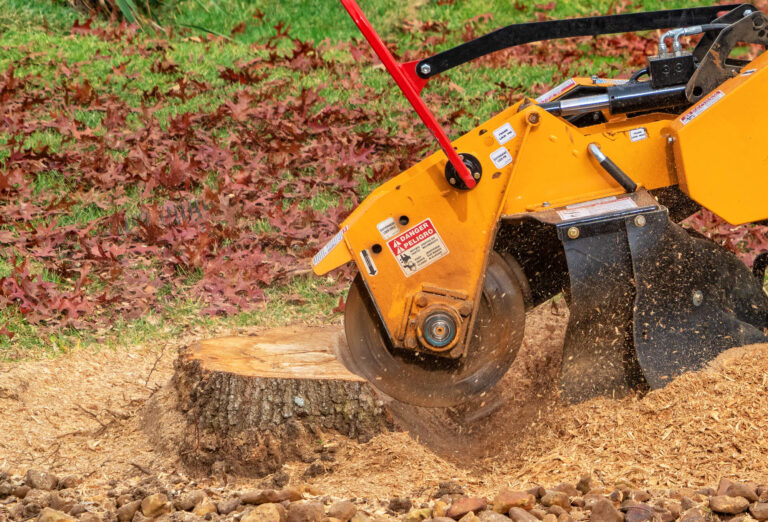
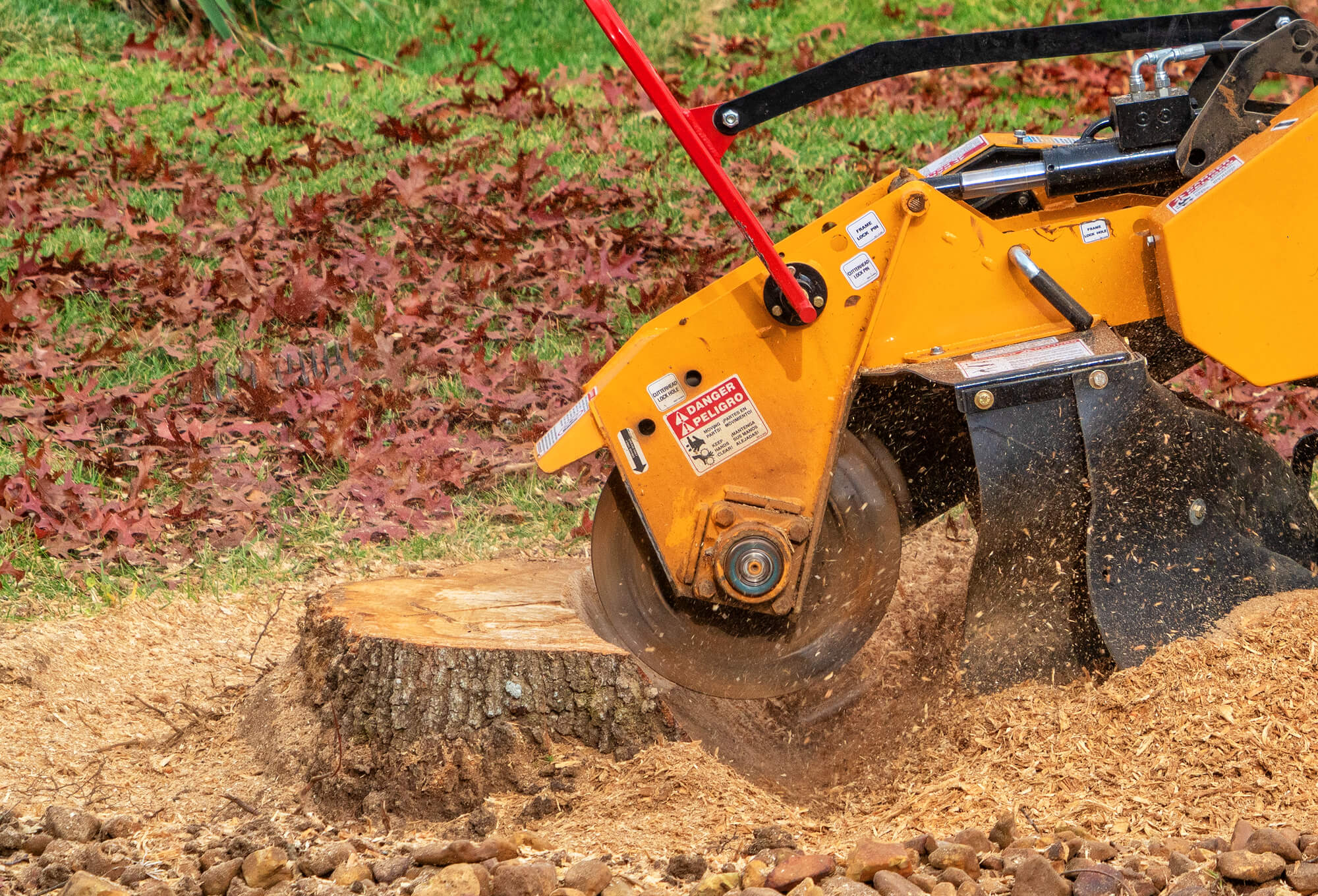
A stump grinder is a machine with a spinning steel wheel covered in carbide teeth. The operator runs it back and forth over the stump, chewing the wood into a pile of small chips. The grinder works above ground and a few inches below — usually 4 to 8 inches below grade.
When it’s done, the stump is gone from sight. There’s a pile of wood chips where the stump used to be. The big roots running out from the trunk are still in the ground, but they’re below the surface and they’ll rot out over the next several years.
A small stump under 12 inches takes about 20 to 30 minutes. A big oak stump can take an hour or two. Most jobs in Fort Worth are done in under three hours, including cleanup.
What stump removal actually is
Stump removal means pulling the entire root ball out of the ground. The crew uses an excavator or a tractor with a backhoe to lift the stump out. The hole that’s left behind can be three or four feet deep and six or eight feet across.
It’s not subtle. The yard takes real damage. Sometimes the surrounding lawn has to be torn up to give the equipment room to swing.
After the stump comes out, you’re left with a crater that needs fill dirt and topsoil before any new grass takes. The repair work alone can take a couple weeks of watering and waiting before the spot looks normal again.
That’s why most homeowners go with grinding.
Stump removal vs stump grinding: the cost difference
Grinding runs $100 to $400 for a standard residential stump in the Fort Worth area. Big stumps or hard-access yards push toward the upper end. We give exact pricing over the phone once we know the diameter and where it’s sitting.
Full removal costs two to four times more. The equipment is bigger and the job takes longer. The cleanup is harder. And you still have to fill the hole and reseed or sod, which is usually a separate cost or a separate contractor.
For most Tarrant County homeowners, grinding is the obvious choice on cost alone.
The mess difference
Grinding produces a contained pile of mulch where the stump used to be. We rake it level, fill the depression with the chips, and haul off the excess if that’s what you want. The lawn around the stump stays untouched.
Removal tears up a wide area. The equipment leaves tracks across your yard. The hole sits open until somebody hauls in fill dirt. The lawn around it needs real recovery time before it looks normal again.
If you’ve got a tidy backyard you care about, grinding wins.
What’s left underground after grinding
This is the question most people don’t think to ask until later: what happens to the roots after grinding?
They stay in the ground. They decompose naturally over five to ten years depending on the species. Pecan and oak roots take longer than softer woods. While they break down, the soil settles a little. You might see a slight depression form over the spot a year or two later. Easy to top off with a shovel of dirt.
Root decomposition does not damage your foundation or your slab or anything else. The roots got cut when the tree came down. They’re already dead. They’re just turning back into soil at their own pace.
When you should actually pick full removal
There are a few cases where grinding won’t cut it.
You’re replanting a new tree in the exact same spot. Old root systems take up space and steal nutrients from a new sapling. Pull the old roots first.
You’re doing foundation or hardscape work where the roots are physically in the way. New retaining wall going across the spot? Pool excavation? Sewer line replacement? Full removal makes sense then.
The stump is rotting and pushing up driveways or sidewalks. Sometimes the root flare is already lifting concrete and the only fix is yanking the whole thing.
In Fort Worth’s heavy clay soil, full removal is also tougher than it would be in sandy ground. The clay grips the roots harder. The equipment has to work more. That’s another reason most people skip it unless they really need it.
When grinding is the right call
For almost every other situation, grinding does the job.
You want the stump gone from your yard. You don’t plan to build on the spot. You don’t plan to replant a tree in the same hole. You’re fine with the slow underground decomposition. You’d like your lawn to look normal again next week.
That’s most homeowners. That’s why most stump jobs in Fort Worth are grinding jobs.
What Fort Worth homeowners usually pick
Out of every ten calls we get across the Fort Worth area, about nine end up being grinding jobs. The other one is usually someone redoing landscape and wanting the roots out before a new install, or a contractor needing the spot cleared for hardscape work.
The February 2021 ice storm killed a lot of trees in this area. We’re still grinding stumps from those losses five years later. Most of those jobs are people who want the eyesore gone cheap and don’t want their yard torn apart in the process. Grinding fits that brief.
How to know which one you need
Ask yourself three questions:
- Do you plan to plant another tree in the exact same spot within the next year?
- Do you plan to build, pave, or excavate where the stump is?
- Is the stump physically damaging hardscape right now?
If you answered no to all three, grinding is your job. Call and we’ll quote it over the phone. If you answered yes to any of them, tell us when you call and we’ll talk through whether removal makes sense.
Get a free quote
We handle stump grinding and removal across Tarrant, Parker, and Johnson counties. Free phone quotes. Same-week service most of the time. Call (817) 523-9099 or send us your details through our contact form.